Skip to content

Building a Sustainable Home Yoga Practice: What’s Actually Worth Buying
There comes a point in every practitioner’s journey when yoga begins to move beyond
something we do and becomes something we live.
In the beginning, it’s easy to believe that progress comes from acquiring more. More classes.
More workshops. More equipment. More techniques. We convince ourselves that the next
purchase might somehow bring us closer to the practitioner we hope to become.
Yet, over the years, I’ve found almost the opposite to be true.
The most meaningful progress rarely comes from accumulating more. It comes from refining
what already exists.
A sustainable yoga practice isn’t built through endless consumption. It’s built through
consistency, curiosity and care.
It is shaped by returning to the mat, day after day, with a willingness to listen rather than simply
perform.
Your Environment Shapes Your Practice…
One lesson that has become increasingly clear through years of teaching teacher trainings and
mentoring practitioners around the world is that our environment quietly influences our
behaviour.If our practice space feels inviting, organised and intentional, we’re far more likely to return to it.
That doesn’t mean creating a picture-perfect yoga studio at home.
Quite the opposite.
Some of the deepest practices I’ve experienced have taken place on a simple mat in a room
that is far from pristine and idyllic.
What matters isn’t luxury.
It’s removing the friction that inhibits showing up for yourself.
The easier it becomes to step onto your mat, the more likely you are to keep showing up.
Rather than filling your space with equipment you’ll rarely use, it can be worth investing in a
handful of well-made tools that genuinely support your practice over many years.
Quality Over Quantity
Modern consumer culture often encourages us to replace rather than repair, upgrade rather
than appreciate.Yoga invites a different relationship.
Instead of asking:
“What else do I need?”
Perhaps the better question becomes:
“What will genuinely serve my practice for years to come?”
Choosing durable equipment is not only kinder to the environment – it often creates a more
satisfying relationship with our practice itself.
There’s something beautiful about using props that age alongside you.
The marks they accumulate become part of your journey.
A Yoga Mat That Becomes Your Companion
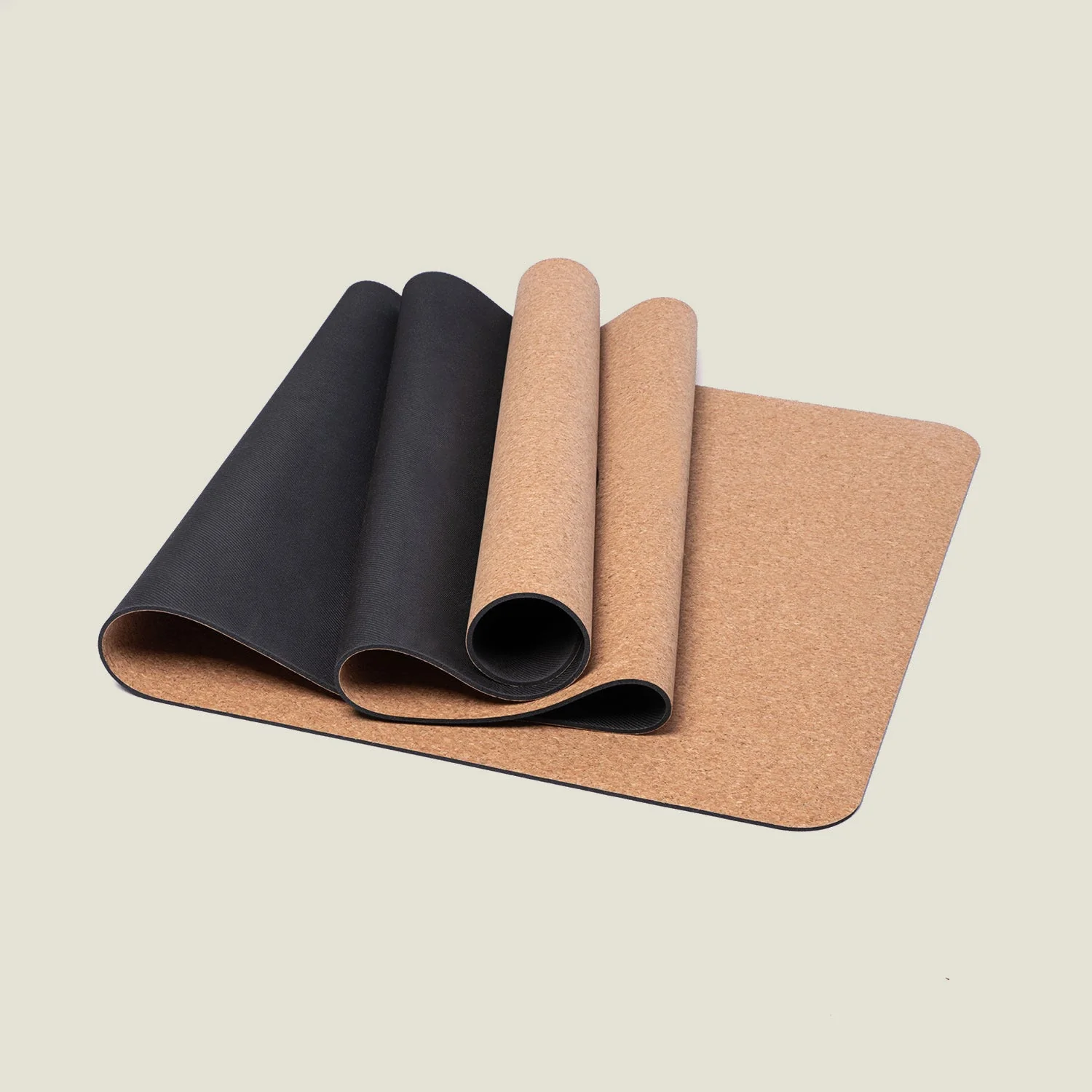
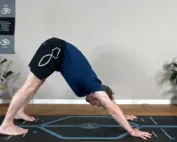
Your yoga mat is perhaps the piece of equipment you’ll spend the most time with.
It supports every breath, every posture and every quiet moment between movements.
Rather than viewing it as another accessory, I encourage students to think of it almost as a
companion to their practice.
Natural cork has become increasingly common as a material for yoga mats.
Its surface provides natural grip, which can increase slightly with moisture, making it useful for
more dynamic or heat-building practices.
Cork is harvested from the bark of cork oak trees rather than by cutting the trees down. The
bark then regenerates over time, allowing it to be harvested again.
For practitioners interested in the materials used in their practice, cork offers a durable, naturally
sourced alternative to many synthetic mat surfaces.
Yoga Blocks That Encourage Exploration
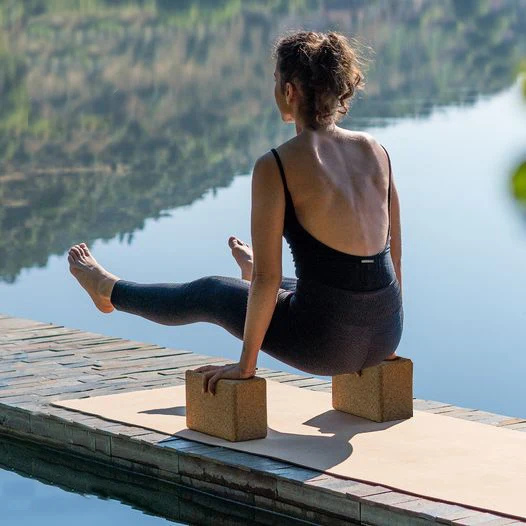
One misconception I often encounter is that yoga blocks are only for beginners.
Nothing could be further from the truth. Some of the strongest practitioners I know use blocks
almost every day.
Not because they need assistance. Because they value precision.
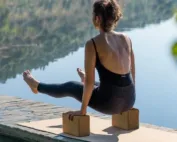
A block allows us to explore movement with greater awareness.
It can reduce unnecessary compensation, create better alignment and help us discover options
that might otherwise remain hidden.
The goal is never to remove challenges.
It’s to place challenges where it becomes productive.
Cork blocks have a reassuring stability and density that many practitioners appreciate, including
myself, particularly during standing balances, arm balances and restorative work.
When treated well, they’re remarkably durable and can easily become a long-term part of a
home practice.
Recovery Is Part of Practice
For many years I believed progress was simply about training harder.
Experience has taught me otherwise. Adaptation doesn’t happen while we’re practising. It
happens afterwards.
Recovery isn’t separate from yoga. It is yoga.
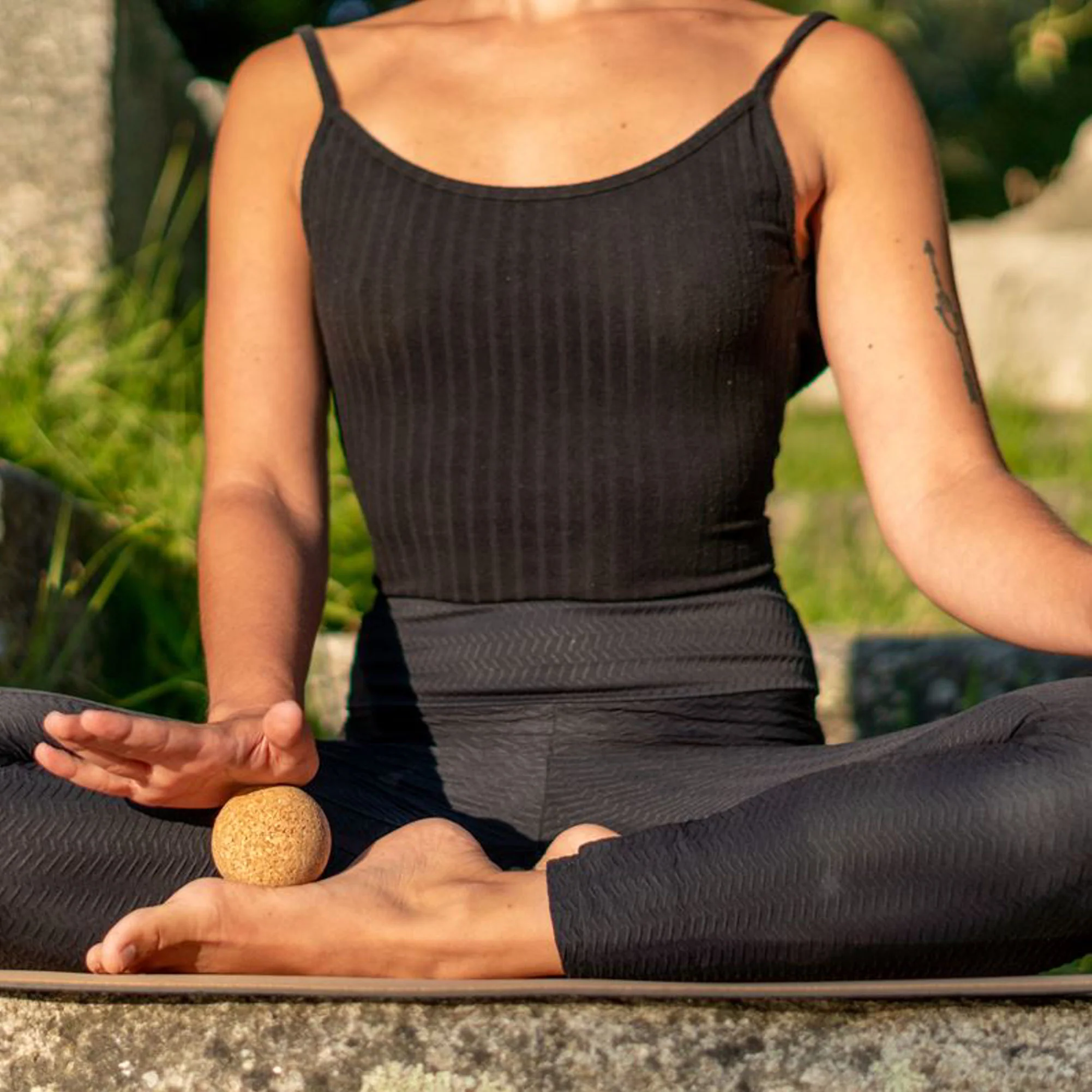
Gentle self-myofascial release using massage rollers or massage balls can be a valuable
addition to a regular movement practice, particularly around areas that commonly accumulate
tension such as the feet, calves, hips, glutes and upper back.
These tools aren’t about forcing tissue to change.
They’re opportunities to slow down. To breathe. To notice.
To cultivate awareness in places we’ve perhaps ignored for too long.
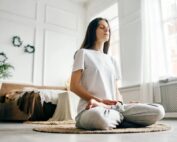
In many ways, they become another form of meditation.
Sustainability Goes Beyond Materials
It’s easy to speak about sustainable products.
It’s more difficult – and perhaps more important – to speak about sustainable practitioners.
Over the past decade I’ve met countless people who pushed themselves into injury through the
belief that more intensity always leads to greater progress.
But longevity asks different questions. Can this practice still support you ten years from now?
Twenty?
Thirty?
Can it evolve alongside changes in your body rather than demanding that your body never
changes?
For me, sustainability means building resilience rather than chasing perfection.
It means understanding breath before force. Awareness before achievement. Quality before
quantity.
These principles apply just as much to our movement as they do to the equipment we choose to
surround ourselves with.
Buy Less. Choose Better.
When building a home yoga space, I don’t believe you need an extensive collection of
equipment.
A well-made mat. A pair of quality blocks. A couple of simple recovery tools.
Beyond that, your greatest investment will always be your own attention. The willingness to
keep learning. To observe your habits. To remain curious.
To return to practice even when motivation fades.
Because ultimately, yoga has never been about owning more.
It’s about becoming more present.
Final Thoughts
One of the quiet lessons yoga continues to teach me is stewardship.
We inherit practices, traditions and knowledge from those who came before us.
With that inheritance comes a responsibility – not only to preserve them, but to carry them
forward with care.
The same principle can extend to the choices we make in our homes.
Choosing equipment that is thoughtfully made, built to last and aligned with the values we hope
to embody is one small expression of that wider philosophy.
If you’re looking to create a more sustainable home practice, begin simply.
Choose tools you’ll still value years from now. Take care of them.
Allow them to support your journey rather than define it.
Because in the end, it isn’t the equipment that transforms us.
It’s the relationship we cultivate with our practice – one breath, one movement and one mindful
return to the mat at a time.
If You’re Looking for Sustainable Yoga Equipment
If you’re beginning to build a more sustainable home yoga practice, it’s worth choosing
equipment that reflects the same values as your practice – quality, longevity and mindful
craftsmanship over disposable convenience.
If you’re interested in exploring cork yoga accessories, you can browse the thoughtfully curated
collection from Portuguese Treasures, featuring cork yoga mats, blocks and recovery tools,
https://portuguesetreasures.com/collections/wellbeing-yoga-accessories