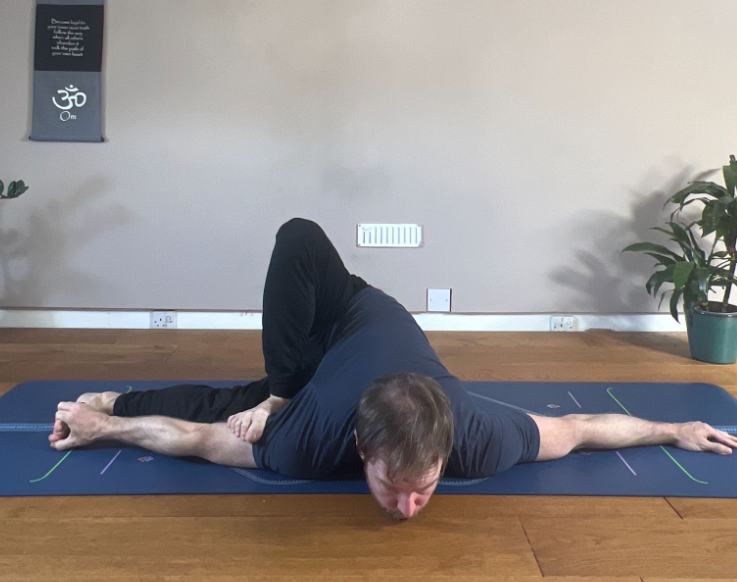
Why Road Kill Pose Feels So Intense and How to Practice It Safely
A Deep Guide to Hip Release, Spinal Rotation, and Nervous System Awareness
Some yoga poses challenge your strength.
Some challenge your flexibility.
And then there are poses like Road Kill Pose – postures that challenge your ability to soften while staying present.
At first glance, the pose looks simple.
You’re low to the ground. Folded. Twisted. Still.
But once you enter it, you quickly realize how much is happening beneath the surface.
The hips tighten.
The breath shortens.
The spine resists rotation.
And suddenly, what looked like a passive stretch becomes a conversation between tension and release.
That’s what makes Road Kill Pose so interesting.
It’s not just about flexibility.
It’s about awareness.
This posture teaches you how to move slowly, breathe deeply, and let go of unnecessary effort without collapsing your structure.
And in modern life – where most people spend hours sitting, rushing, bracing, and holding stress – that kind of practice matters more than ever.
What is Road Kill Pose?
Road Kill Pose is a deep twisting forward fold that combines:
- Hip opening
- Hamstring lengthening
- Thoracic spine rotation
- Side body release
- Nervous system downregulation
The posture is usually practiced from a wide-legged stance, where the torso folds forward and rotates so one shoulder lowers toward the floor.
The name may sound unusual, but the shape resembles the body flattened close to the ground with an asymmetrical twist.
Even though the posture appears passive, it requires:
- Controlled mobility
- Awareness of alignment
- Active breathing
- Gradual release
Most people underestimate how much coordination the pose demands.
Because the challenge isn’t just getting into the shape.
The challenge is learning how to relax inside the shape.
Why Road Kill Pose Feels So Difficult
Many people assume they struggle with this posture because they are “not flexible enough.”
But flexibility is only one piece of the puzzle.
What often makes the pose feel difficult is the combination of movements happening simultaneously.
You are asking the body to:
- Fold deeply
- Rotate the spine
- Lengthen the hamstrings
- Open the hips
- Relax while under tension
That last part is important.
The nervous system does not always feel safe in deep rotational shapes.
When the body senses instability, it creates muscular tension to protect itself.
That’s why many practitioners experience:
- Tight breathing
- Gripping in the hips
- Jaw tension
- Shoulder resistance
- Lower back stiffness
The body is not “failing.”
It’s responding.
And the more aggressively you push into the pose, the more the body usually resists.
This is why Road Kill Pose works better when approached with patience rather than force.
What You Actually Need for This Pose
1. Hamstring Mobility
If the backs of the legs are tight, the pelvis struggles to tilt forward correctly.
This often causes:
- Lower back rounding
- Compression in the spine
- Restricted rotation
Healthy hamstring mobility creates more freedom throughout the entire posture.
2. Hip Space
The outer hips and inner thighs both influence how comfortably the body can rotate and fold.
When the hips feel restricted:
- The twist becomes forced
- The knees compensate
- The lower back absorbs extra pressure
Creating gradual hip mobility makes the posture feel smoother and safer.
3. Thoracic Spine Rotation
Most twisting limitations actually comes from the upper back, not the lower back.
The thoracic spine is designed for rotation.
But modern posture often leaves it stiff and underused.
Without thoracic mobility:
- The neck overworks
- The lumbar spine compensates
- The twist feels blocked
4. Breath Awareness
Breathing changes everything in this pose.
If the breath becomes shallow:
- The nervous system stays guarded
- Muscles remain tense
- The posture feels heavier
But as the breath slows, the body gradually softens.
The breath is not separate from the pose.
It is part of the pose.
5. Patience
This posture cannot be rushed.
Some days, the body opens easily.
Other days, it resists.
Learning to work with that reality instead of fighting it is part of the practice itself.
Step-by-Step: How to Practice Road Kill Pose
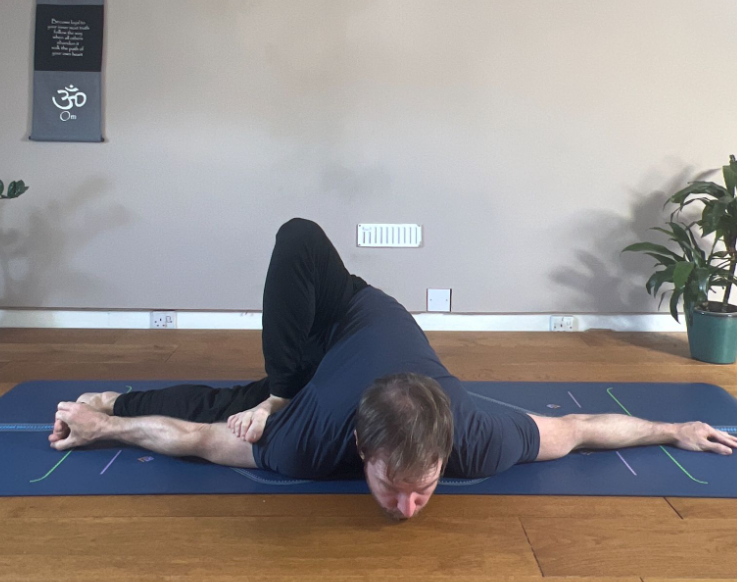
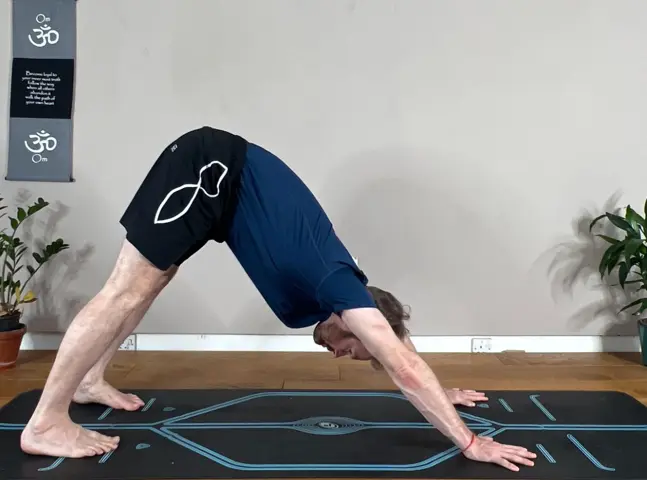
1. Begin with a Wide Stance
Stand with your feet wider than hip-width apart.
Not extremely wide.
Just enough to create space for the fold and twist.
Ground evenly through both feet.
Keep a soft bend in the knees if the hamstrings feel tight.
This is important.
Locked knees usually create more tension, not more depth.
Pause here and take a few steady breaths.
2. Fold Forward Slowly
Bring your hands toward the floor.
Instead of collapsing downward, think about lengthening forward first.
This changes the mechanics of the posture completely.
When the spine lengthens before folding:
- The lower back stays safer
- The hips move more naturally
- The twist becomes more spacious
Move slowly enough that you can actually feel the transition.
3. Introduce the Twist
Place one hand closer toward the center line of the body.
Then begin rotating the chest gently toward one side while lowering the opposite shoulder toward the floor.
Do not yank yourself into position.
The twist should feel gradual and alive, not forced or compressed.
Think:
“Rotate and lengthen.”
Not:
“Pull and push.”
4. Let the Breath Guide the Depth
This is where the pose truly begins.
Many people enter the shape physically but never relax into it mentally.
Instead of chasing more depth:
- Slow the breath
- Relax the jaw
- Soften the eyes
- Allow the exhale to reduce tension
Each breath becomes an opportunity to create more space internally.
Sometimes the posture changes dramatically simply because the nervous system stops resisting.
5. Keep the Legs Active
Even though the upper body feels passive, the legs should stay gently engaged.
Press evenly through the feet.
Lift slightly through the thighs.
This creates support for the spine and prevents collapsing into the joints.
Active legs create safer mobility.
6. Relax Unnecessary Tension
Notice where you are gripping.
Common areas include:
- The neck
- The jaw
- The shoulders
- The toes
- The forehead
Most people hold more tension than they realize.
The goal is not to become completely limp.
The goal is to release what the body no longer needs.
7. Come Out Slowly
Exiting the pose matters just as much as entering it.
Bend the knees slightly.
Press through the feet.
Rise slowly with control.
Fast transitions can make the nervous system feel jarred or unstable after deep folding postures.
Take your time.
Common Mistakes in Road Kill Pose
Forcing the Twist
This is the biggest mistake.
Aggressive twisting usually creates compression instead of healthy mobility.
The spine responds better to gradual movement and steady breathing.
Locking the Knees
Many practitioners think straight legs automatically mean better alignment.
But locked knees often:
- Restrict the pelvis
- Strain the hamstrings
- Increase lower back tension
A small bend can completely change the experience.
Pulling with the Arms
Using the arms to crank the body deeper creates unnecessary force.
The rotation should originate from the spine and breath, not aggressive leverage.
Holding the Breath
Breath-holding is usually a sign the nervous system feels threatened or overloaded.
When this happens:
- Ease out slightly
- Slow down
- Re-establish steady breathing
Depth without breath is rarely productive.
Simple Ways to Make the Pose Easier
Use Yoga Blocks
Blocks bring the floor closer and reduce strain.
This allows the spine to lengthen more naturally.
Bend the Knees
There is absolutely nothing wrong with bent knees in forward folds.
In many cases, it creates better mechanics and safer movement.
Reduce the Twist
You do not need maximum rotation to benefit from the pose.
Smaller, controlled twists are often more effective than aggressive ones.
Practice Near a Wall
A wall can help with balance and orientation while learning the posture.
Focus on Breathing Instead of Depth
This one changes everything.
When the goal becomes smoother breathing instead of deeper stretching, the pose often improves naturally.
Poses That Help You Build Toward Road Kill Pose
Wide-Legged Forward Fold
Builds hamstring mobility and grounding awareness.
Revolved Triangle Pose
Teaches controlled spinal rotation with active legs.
Supine Twists
Allows the body to explore rotation without standing balance demands.
Lizard Pose

Opens the hips and creates more pelvic freedom.
Cat-Cow
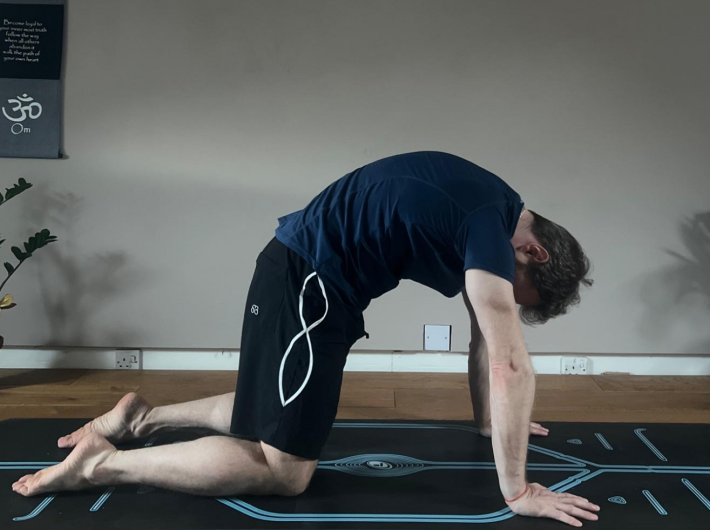
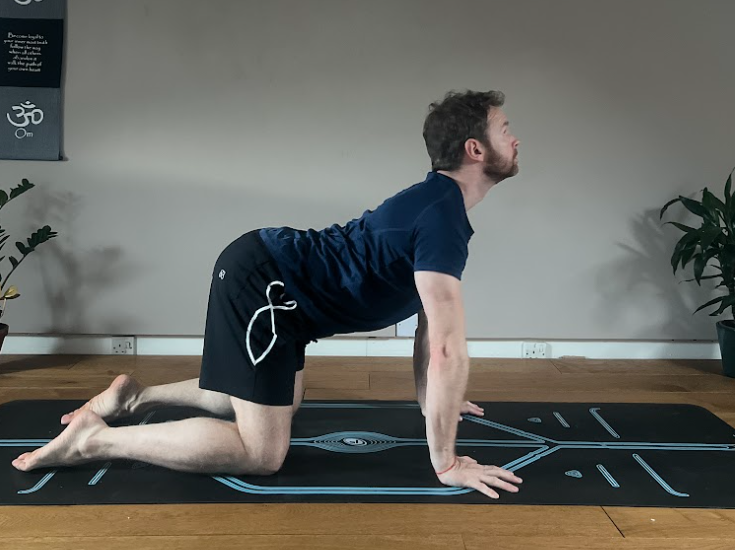
Improves spinal awareness and segmental movement.
The Nervous System Side of This Pose
This is something rarely discussed in yoga spaces.
Deep forward folds and twists often affect people emotionally.
Why?
Because these positions can shift the nervous system toward a more introspective and vulnerable state.
When practiced slowly:
- Breathing slows
- Heart rate decreases
- Muscle guarding reduces
- Mental chatter softens
For some people, this feels calming.
For others, it can feel uncomfortable at first.
That’s why approaching the pose gradually matters.
You are not just stretching muscles.
You are teaching the body how to feel safe while releasing tension.
A Better Way to Think About This Pose
Instead of asking:
“How deep can I go?”
Try asking:
“How calm can I stay while moving deeper?”
That question changes the entire posture.
Because Road Kill Pose is not really about flexibility.
It’s about learning:
- Control without rigidity
- Relaxation without collapse
- Awareness without force
And those lessons carry far beyond a yoga asana practice.
When to Practice Road Kill Pose
This posture works best:
- After warming the hips and spine
- During slower mobility-focused practices
- Near the middle or end of a session
- When the nervous system needs grounding
It is not ideal:
- At the very beginning of practice
- When rushing
- When the body is cold
- Immediately after intense spinal loading
Timing matters.
Safety Notes
Be cautious if you have:
- Lower back injuries
- Hamstring strains
- SI joint instability
- Severe spinal issues
- Vertigo or dizziness
Always prioritize stability over range of motion.
If something feels sharp, pinching, or unstable:
- Back out slowly
- Reduce depth
- Modify the position
Pain is not progress.
Final Thoughts
Road Kill Pose teaches a lesson many people need both on and off the mat.
You do not have to force your way deeper to make progress.
Sometimes progress looks like:
- Breathing more smoothly
- Holding less tension
- Moving more patiently
- Listening more carefully to the body
Some days the pose will feel spacious and grounding.
Other days it may feel restricted or emotionally heavy.
That’s normal.
Because yoga is not about performing the perfect shape every day.
It’s about building a relationship with your body that becomes more honest, aware, and sustainable over time.
Road Kill Pose simply gives you another opportunity to practice that.
Stay patient.
Stay curious.
Keep breathing.
Want to Go Deeper?
If you want to understand poses like this on a deeper level – not just how they look, but how they actually work – there’s more to explore.
Join my online yoga classes on Patreon or work with me 1-to-1 through the DJY mentorship program.
We focus on:
- Nervous system regulation practices
- Joint strength and mobility
- Intelligent progressions (not random flows)
- Building a practice that actually evolves with you
Because real progress in yoga isn’t about doing more poses.
It’s about understanding and embodying the ones you’re already doing.