Skip to content

Why Flying Lizard Pose Feels Hard and How to Fix It
A Practical Guide to Building Strength, Control, and Lift
By Dav Jones, Senior Yoga Teacher and Teacher Trainer
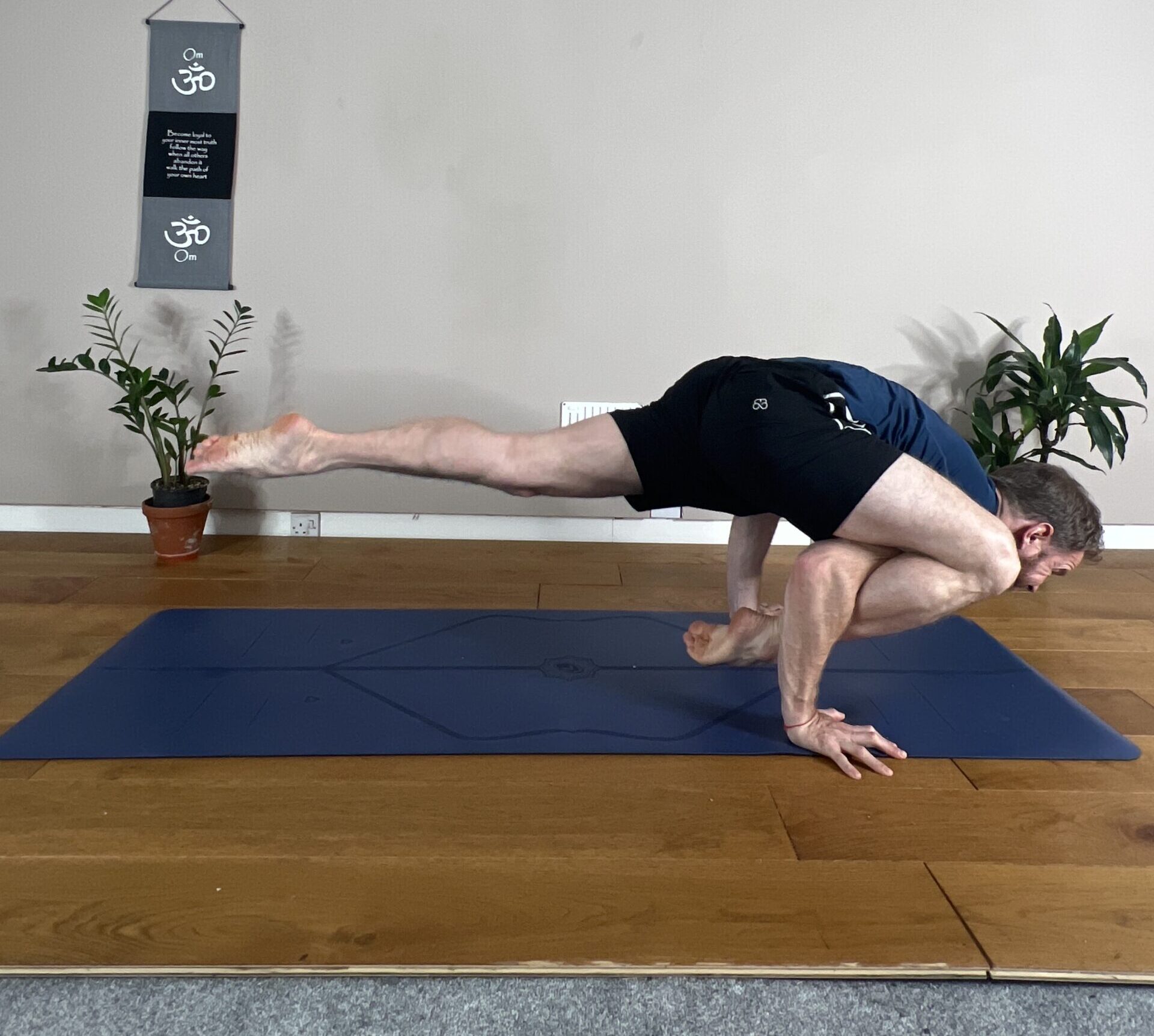
Flying Lizard Pose is one of those postures that looks impressive, but feels even more interesting when you start working on it. It sits somewhere between a deep hip opener and an arm balance. You’re low to the ground, yet trying to lift off it. That contrast is what makes it challenging.
This isn’t a pose you force your way into. It’s something you build, step by step, through awareness, strength, and patience.
What is Flying Lizard Pose?
Flying Lizard is a progression from Lizard Pose.
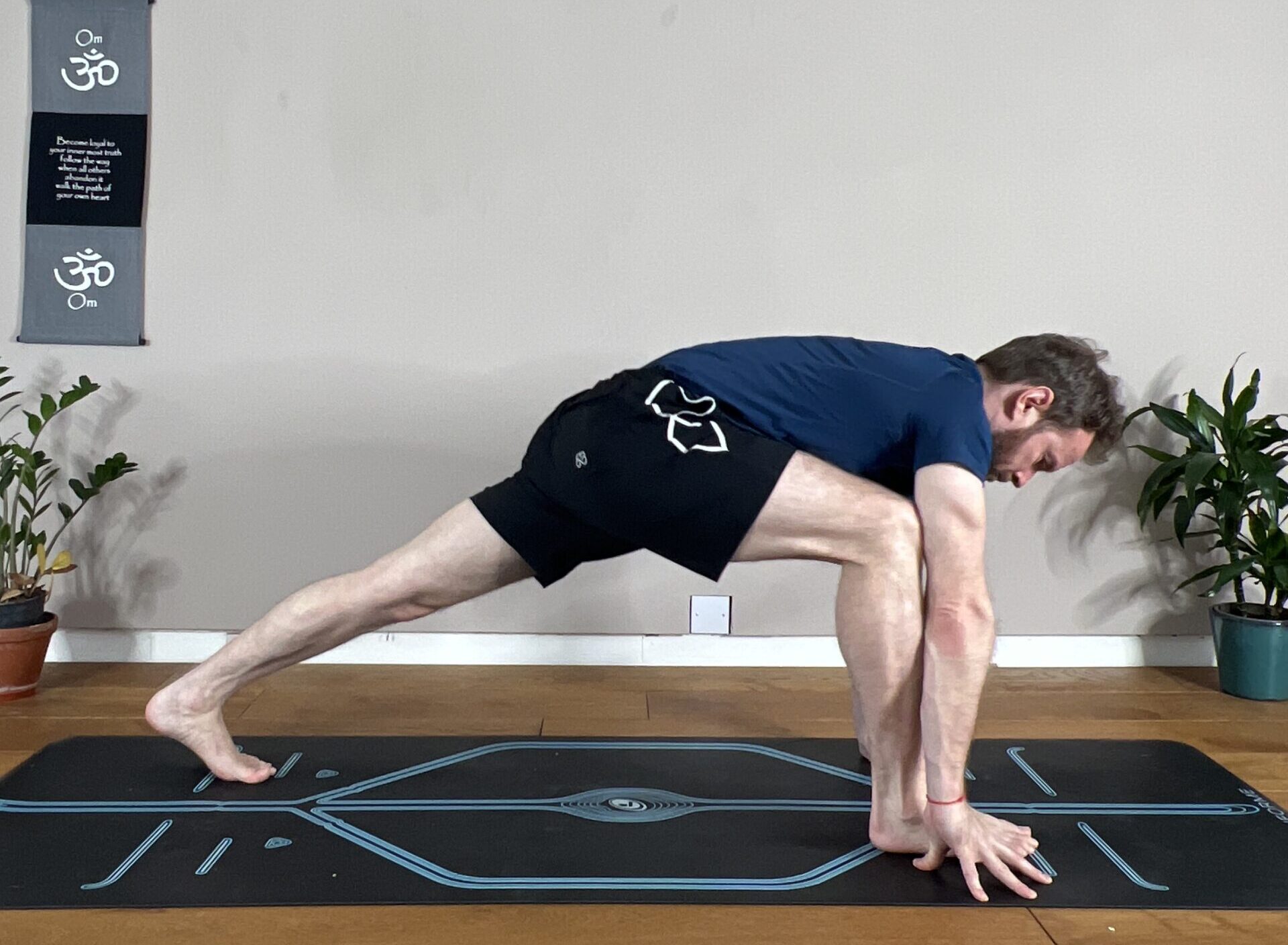
You start low, close to the mat, with your front leg deeply bent and your hips open. From there, instead of staying grounded, you begin to shift your weight into your hands. Eventually, both feet can lift.
But here’s the truth – most of the work happens before the feet ever leave the floor.
Why This Pose Feels So Difficult
It’s not just strength.
It’s coordination.
You’re asking your body to:
- Open the hips deeply
- Stabilize the shoulders
- Trust the hands
- Shift your center of gravity forward
That last part is where most people get stuck.
They try to lift… without shifting.
And nothing happens.
What You Actually Need (Hint: Not Just Strong Arms)
- Hip space – especially external rotation
- Shoulder stability – pushing the floor away
- Core engagement – to create lift
- Confidence in your hands
If one of these is missing, the pose feels blocked.
Step-by-Step: How to Practice Flying Lizard
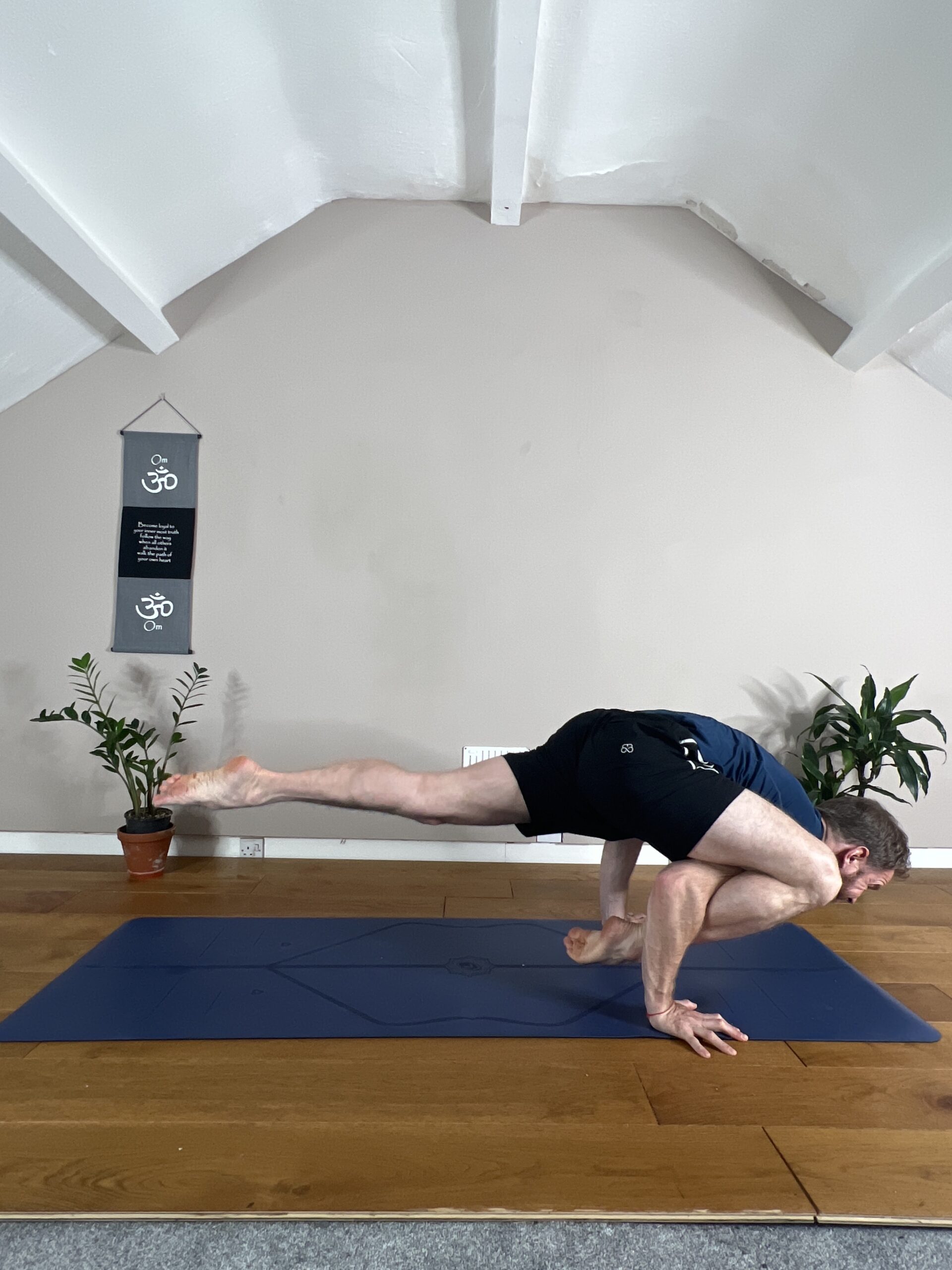
1. Start Low and Honest
Come into a deep lunge with both hands inside your front foot.
Stay here for a few breaths.
If this already feels intense, that’s your work.
2. Bring Your Shoulder Under the Leg
Walk your front foot slightly wider.
Then gently guide your shoulder underneath your thigh.
Don’t force it.
Let the body find space over time.
3. Set Your Hands and Arms
Place your palms firmly down.
Bend your elbows slightly, similar to Chaturanga Dandasana.
Think: not collapsing… but controlled lowering.
4. Lean Forward (This Changes Everything)
This is the key moment.
Shift your chest forward.
Not up. Not back.
Forward.
Your weight needs to move over your wrists.
Without this, the feet won’t lift.
5. Lighten the Back Foot
Keep your toes on the ground at first.
Then slowly start to reduce weight.
Almost like you’re testing the idea of lifting, not committing yet.
6. Explore the Lift
Maybe the back foot floats.
Maybe it doesn’t.
Maybe the front foot feels light.
That’s enough.
You don’t need the full pose to be doing the work.
7. Come Out Slowly
Lower everything back down.
Step back.
Reset your breath.
What Most People Get Wrong
- Trying to jump into the pose
This creates tension and instability - Not shifting forward enough
The body stays behind the wrists, so nothing lifts - Forcing the hip position
This leads to strain instead of progress - Holding the breath
Which makes everything harder than it needs to be
Simple Ways to Make It Easier
- Place blocks under your hands
- Keep the back knee down
- Practice just the weight shift (skip the lift entirely)
- Work on Crow Pose to build arm balance awareness
Poses That Help You Build Toward It
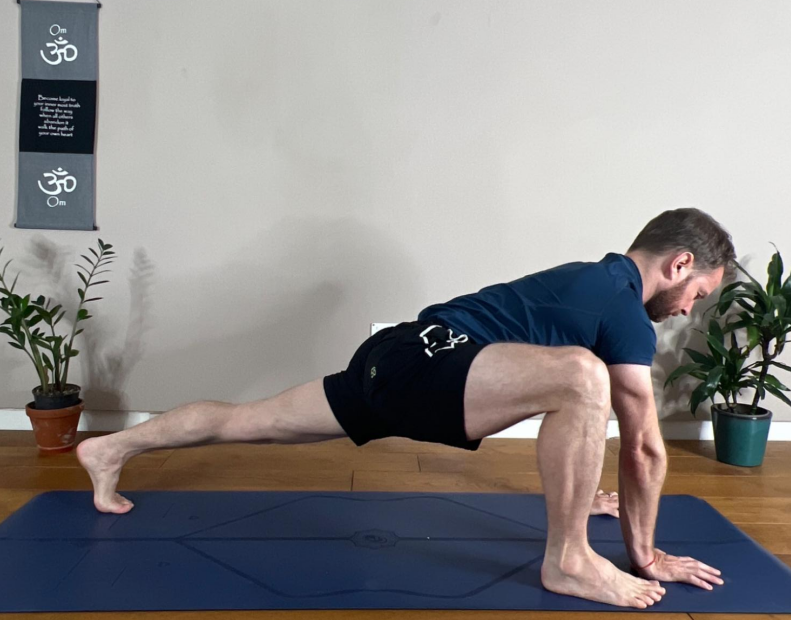
- Lizard Pose – for hip opening
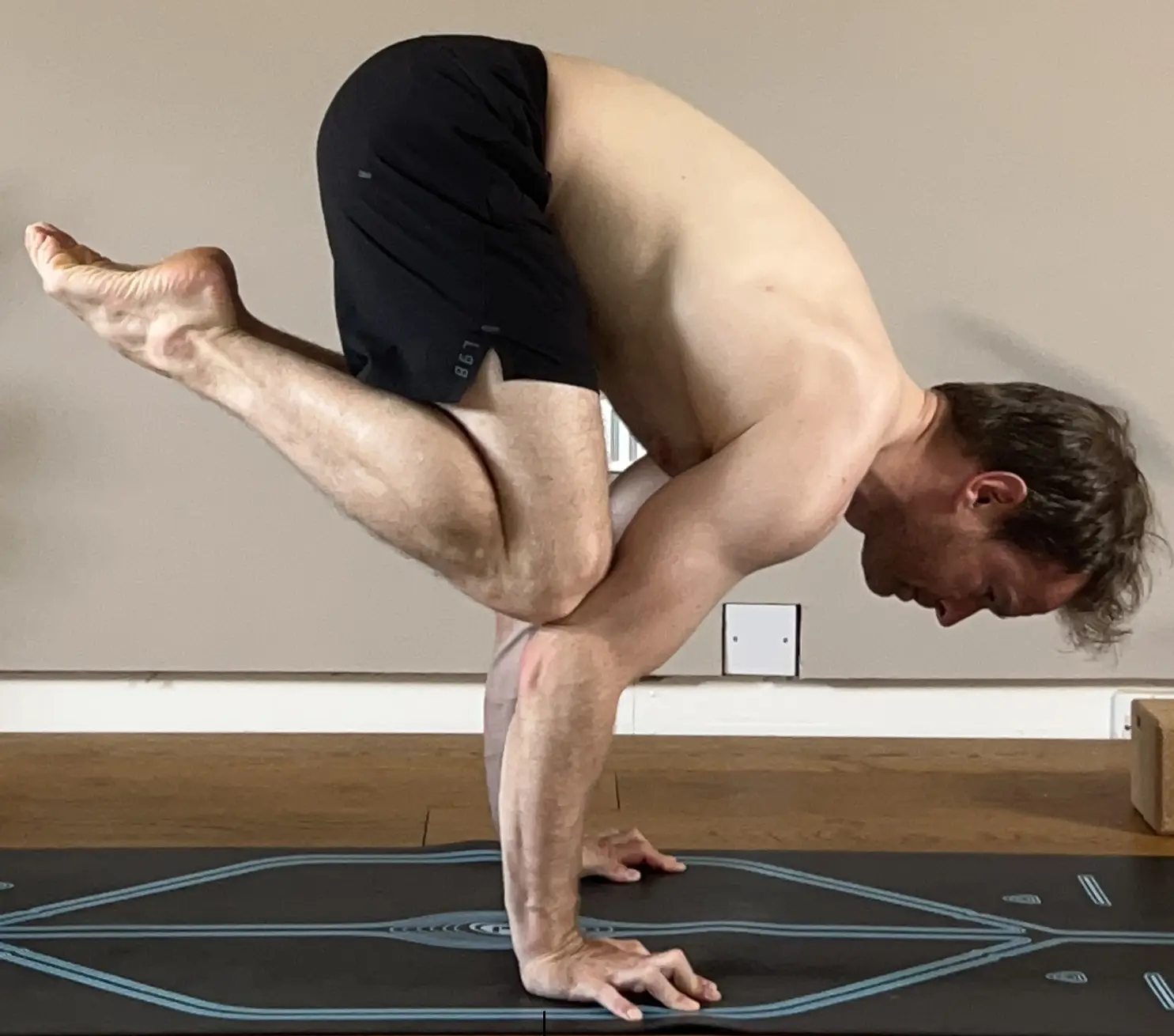
- Crow Pose – for learning to trust your hands
- Side Crow – for asymmetrical balance
- Low lunges – for building space and control
A Better Way to Think About This Pose
Instead of asking:
“Can I lift my feet?”
Try asking:
“Can I shift my weight with control?”
That one change makes everything clearer.
Because Flying Lizard isn’t about lifting.
It’s about balance in motion.
When to Practice It
- After your hips are warm
- After some shoulder activation
- When you’re focused, not rushed
This isn’t a pose for the end of a long, tiring session.
It needs attention.
Safety Notes
- Be mindful of your wrists
- Don’t push into hip discomfort
- Keep your shoulders active, not collapsed
If something feels sharp or unstable, step back.
There’s always another way to build.
Final Thoughts
Flying Lizard Pose isn’t something you achieve overnight.
It’s something you build, through small shifts, better awareness, and consistent practice.
Some days, your feet won’t lift.
Some days, everything will feel heavy.
That’s part of it.
Because this pose isn’t really about flying.
It’s about learning how to support your body, trust your hands, and move with control.
Stay patient. Stay curious. Keep showing up.
Want to Go Deeper?
If you want to understand poses like this on a deeper level, not just how they look, but how they work, there’s more to explore.
Join my online yoga classes on Patreon or work with me 1-to-1 through the DJY mentorship program.
We focus on:
- Nervous system-based yoga
- Joint strength and mobility
- Intelligent progressions (not random flows)
- Building a practice that actually evolves with you
Because real progress in yoga isn’t about doing more poses.
It’s about understanding the ones you’re already doing.