Skip to content


7 Yoga Poses for Insomnia That Help You Sleep Faster Naturally
Sleep is not something you force.
It is something your body allows.
If you struggle with insomnia, the issue is rarely a lack of tiredness. It is usually the nervous system that hasn’t shifted into rest mode. Long days, screen exposure, mental load, and emotional stress keep the body in a constant state of alertness.
From a physiological perspective, this is called sympathetic dominance – your “fight or flight” state.
Yoga works by doing the opposite.
It helps you access the parasympathetic nervous system, where recovery, digestion, and deep sleep happen. Through specific postures, slow breathing, and reduced muscular effort, yoga creates the internal conditions needed for sleep.
In this blog, you’ll learn 7 yoga poses for insomnia that calm your body, reduce overthinking, and help you fall asleep naturally.
Why Yoga Works for Insomnia
Most sleep issues are not about the mind alone.
They are about the body staying “on.”
When your body is tense:
- Your breath becomes shallow
- Your heart rate stays elevated
- Your brain remains alert
Yoga changes this by:
- Slowing down breathing patterns
- Reducing muscular tension
- Sending safety signals to the brain
Over time, your body learns:
“It’s safe to switch off now.”
1. Legs Up the Wall (Viparita Karani)
This is one of the most powerful poses for calming the nervous system quickly.
Elevating the legs improves circulation and reduces physical fatigue. At the same time, the stillness of the pose signals the brain that there is no immediate demand or threat.
Benefits:
- Slows heart rate
- Reduces restlessness
- Calms the mind
How to do it:
- Sit close to a wall
- Lift your legs up against it
- Rest your arms comfortably
- Stay for 5 – 10 minutes
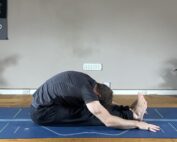
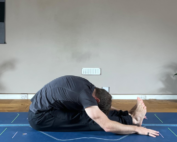
2. Child’s Pose (Balasana)
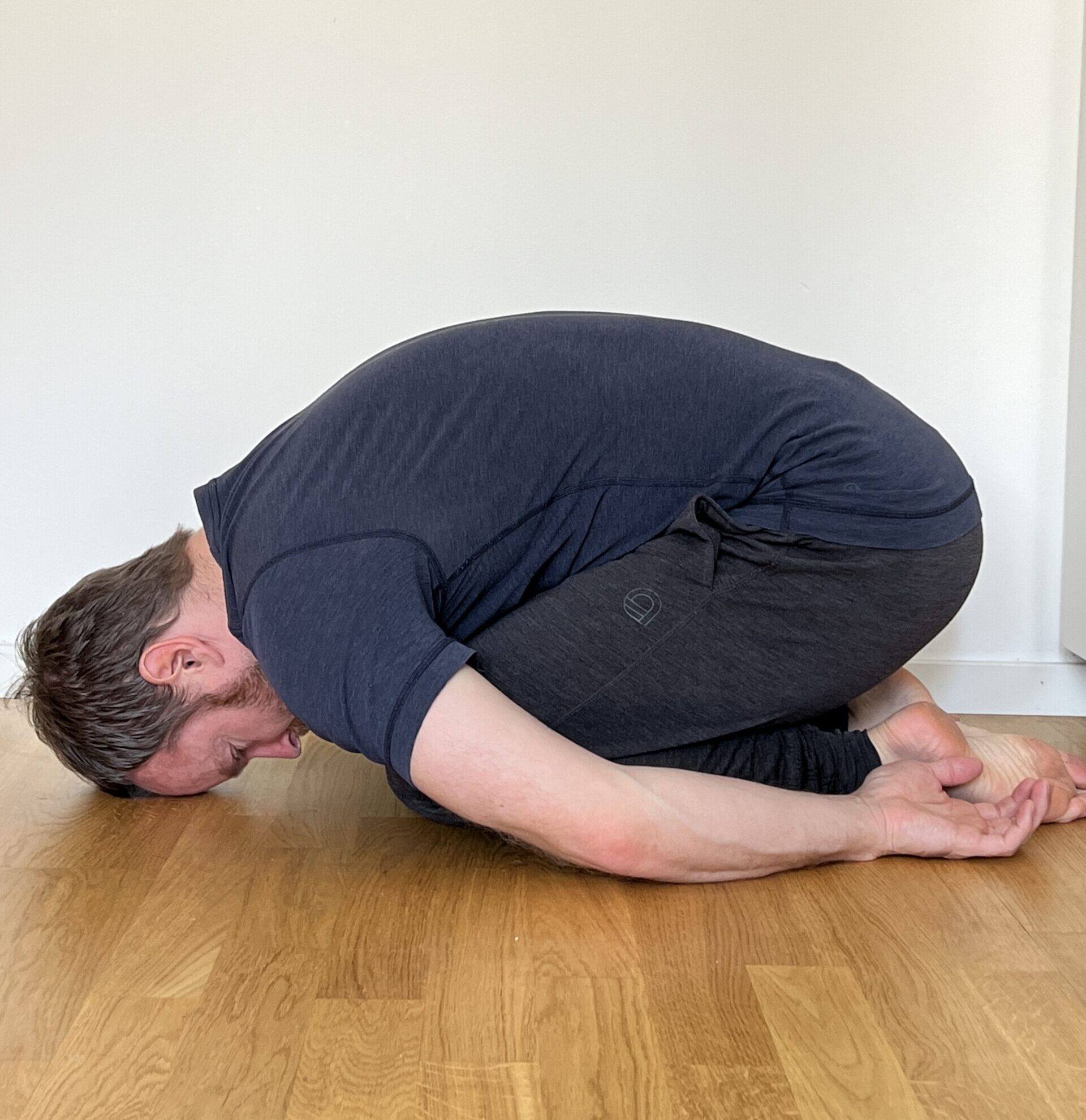
Child’s Pose creates gentle pressure on the front body, which has a grounding and soothing effect.
Resting your forehead down also stimulates relaxation through the nervous system.
Benefits:
- Reduces anxiety
- Encourages deep breathing
- Releases back tension
How to do it:
- Kneel and fold forward
- Rest your forehead down
- Keep your breath slow and steady
- Stay for 2 – 5 minutes
3. Supine Twist (Supta Matsyendrasana)
Twisting helps release tension in the spine and supports digestion – both important for sleep quality.
It also creates a gentle rotational movement that relaxes the body deeply.
Benefits:
- Relieves spinal tension
- Improves digestion
- Encourages slower breathing
How to do it:
- Lie on your back
- Bring one knee across your body
- Extend opposite arm
- Stay for 1 – 2 minutes each side
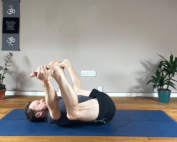
4. Reclining Bound Angle Pose (Supta Baddha Konasana)
This pose gently opens the hips while keeping the body supported and relaxed.
The openness allows deeper breathing and releases stored tension in the pelvis.
Benefits:
- Relaxes hips and lower body
- Encourages diaphragmatic breathing
- Reduces stress
How to do it:
- Lie on your back
- Bring soles of feet together
- Let knees fall open
- Stay for 5 minutes
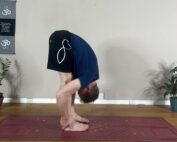
5. Forward Fold (Uttanasana)
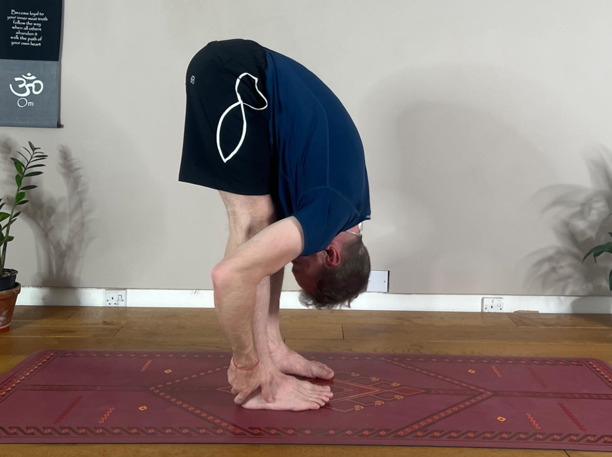
Forward folds naturally draw your awareness inward.
Letting the head hang reduces tension in the neck and stimulates a calming response.
Benefits:
- Calms the brain
- Reduces stress
- Releases upper body tension
How to do it:
- Stand and fold forward
- Keep knees slightly bent
- Let head relax
- Stay for 1 – 2 minutes
6. Cat–Cow (Marjaryasana–Bitilasana)
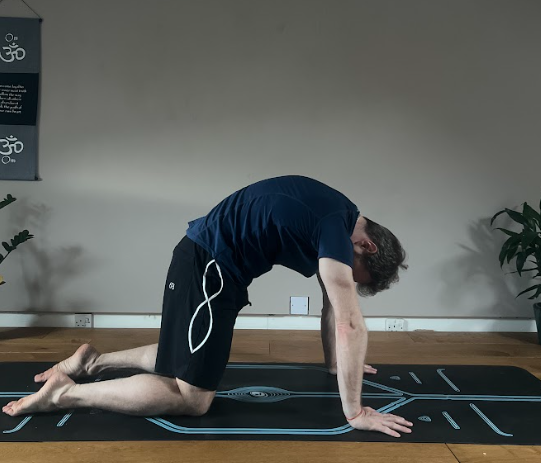
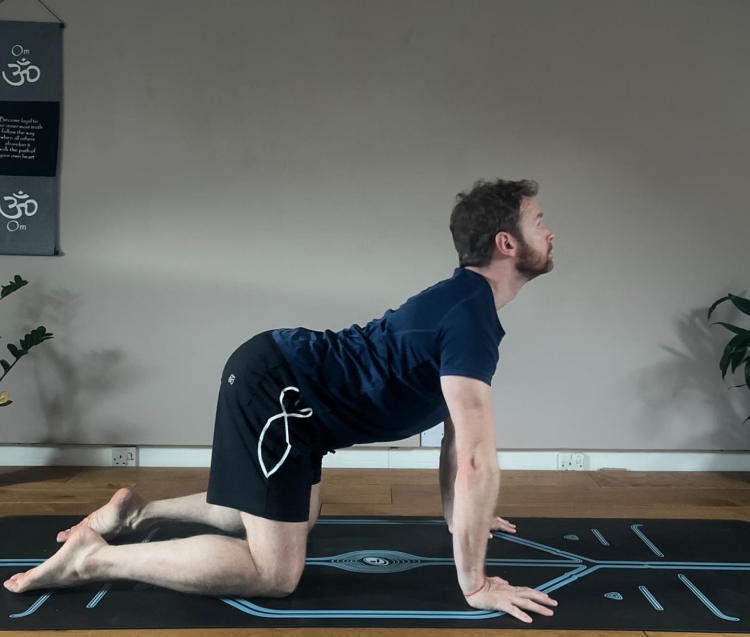
This gentle movement sequence helps transition your body from activity into rest.
It also synchronizes breath and movement, which is key for calming the nervous system.
Benefits:
- Releases spinal stiffness
- Improves breath awareness
- Reduces mental tension
How to do it:
- Inhale: open the chest
- Exhale: round the spine
- Move slowly for 1 – 2 minutes
7. Corpse Pose (Shavasana)
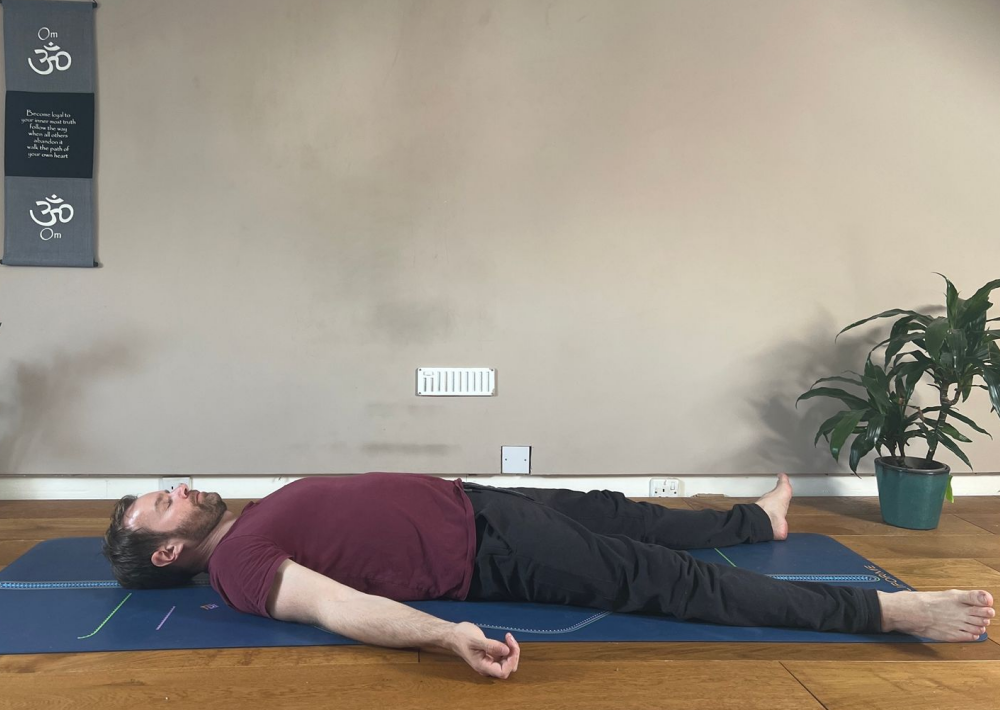
This is where everything integrates.
Shavasana teaches the body how to fully let go – physically and mentally.
Benefits:
- Deep relaxation
- Nervous system reset
- Prepares body for sleep
How to do it:
- Lie flat on your back
- Close your eyes
- Focus on slow breathing
- Stay for 5 – 10 minutes
Simple Bedtime Yoga Routine
You don’t need to do everything.
Try this simple flow:
- Cat–Cow → 2 minutes
- Forward Fold → 1 minute
- Supine Twist → 2 minutes each side
- Legs Up the Wall → 5 minutes
- Shavasana → 5–10 minutes
Total time: 15 – 20 minutes
Consistency matters more than intensity.
Common Mistakes
Avoid these if you want better sleep:
- Doing intense yoga before bed
- Rushing through poses
- Holding your breath
- Using your phone during practice
Final Thoughts
Insomnia is not something that needs to be forced or fixed.
It is a signal that your body has not yet transitioned into a state of safety.
Yoga offers a practical way to move toward sleep instead of chasing it.
By practicing calming postures like Legs Up the Wall, Child’s Pose, Supine Twist, and Shavasana, the body gradually shifts from alertness to rest. These shapes influence breathing, circulation, and neural feedback – the foundations of deep sleep.
Even 10 – 15 minutes of mindful movement can begin to quiet the mind and release physical tension.
Over time, something more valuable develops:
The ability to pause.
To notice when your body is holding stress.
And to guide yourself back into balance.
This is where yoga becomes more than movement.
It becomes a tool for self-regulation.
If you want to go deeper into this approach,
join me in my online classes on Patreon, or explore the DJY Mentorship Program, where we focus on awareness, regulation, and intelligent movement – not just flexibility.