Skip to content

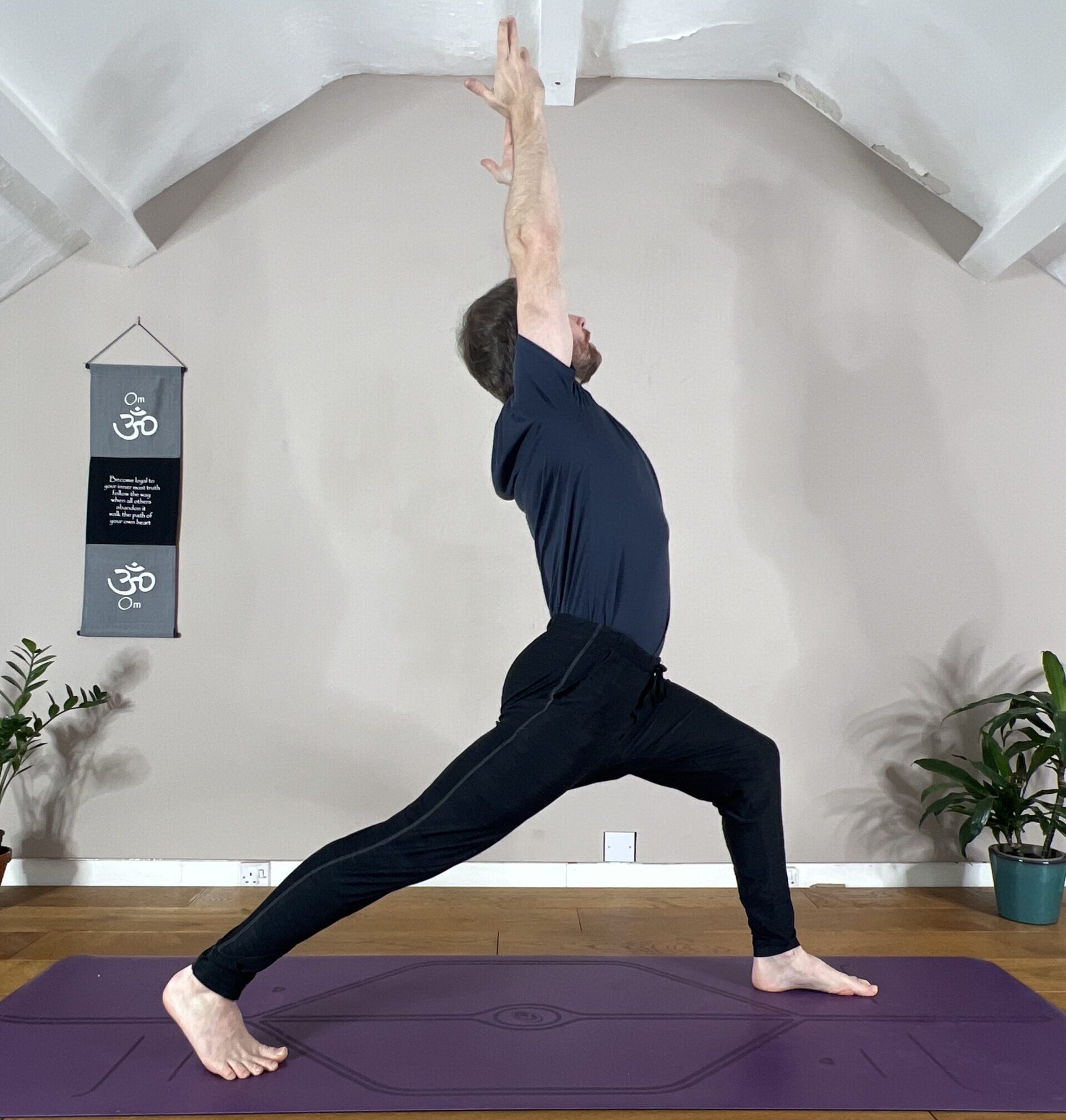
How to Practice High Lunge (Alanasana) with Strength, Stability, and Awareness
By Dav Jones, Senior Yoga Teacher and Teacher Trainer
From a kinesiologist’s lens, High Lunge (Alanasana) is a conversation between neuromuscular control, fascial tension, and breath-driven stability. High Lunge is an integrated movement that recruits multiple muscle chains, coordinates joint mechanics, and refines proprioceptive awareness.
Let’s unpack how this deceptively simple pose becomes a full-body movement lab for strength, mobility, and mindfulness.
What Is High Lunge (Alanasana)?
In Sanskrit, Alana means “stretch” or “lunge,” and asana means “posture.”
High Lunge combines ground reaction forces, axial extension, and pelvic alignment’s where kinetic energy transfers seamlessly from the ground, through the legs, hips, to the spine and arms.
Biomechanically, it sits at the intersection of hip extension, ankle dorsiflexion, and thoracic lift. The front leg stabilises eccentrically (lengthening under load) while the back leg works concentrically – contracting the glutes and quadriceps to create stability and support.
The result? A controlled dialogue between strength, expansion, and expression.
Benefits of High Lunge (Alanasana)
🔹 Physical Benefits (From a Movement Science Perspective)
- Functional Leg Strength: Activates glutes, hamstrings, and quadriceps in both concentric and eccentric phases for gait, running, and bipedal movement.
- Hip Flexor Decompression: Lengthens the psoas and rectus femoris of the back leg, which can help help pelvic alignment after long hours of sitting.
- Core Integration: Engages deep stabilizers (transverse abdominis, multifidus, pelvic floor) to maintain neutral spine and prevent lumbar collapse.
- Foot-to-Core Connectivity: Encourages active engagement of the plantar fascia and intrinsic foot muscles, enhancing balance and kinetic awareness.
- Posterior Chain Engagement: Promotes co-activation of glutes and hamstrings for joint protection and efficient hip mechanics.
- Thoracic Extension & Shoulder Integration: Lifting the arms overhead activates the serratus anterior and upper traps, creating anterior expansion and increased breathing space at the front body.
🔹 Neural & Energetic Benefits
- Proprioceptive Training: High Lunge demands a high level of joint receptor feedback – especially from the ankle, knee, and hip joints – to maintain vertical alignment and prevent overcorrection.
- Refined Breath Mechanics: Each inhalation provides diaphragmatic descent, increasing intra-abdominal pressure and spinal stiffness, while each exhalation recruits the transverse abdominis and pelvic floor to create a pressurized stability system. This rhythmic exchange enhances motor control and the mind–body link, transforming breath into a tool for structural integration rather than just relaxation.
- Grounding & Focus: The oscillation of micro-movements in balance (called postural sway) stimulates the vestibular system and somatosensory cortex, anchoring awareness in the present moment. This process down-regulates hyperactive sympathetic tone and enhances parasympathetic grounding, promoting steadiness both physically and mentally.
- Energetic Alignment: Subtly, proprioceptive precision awakens udana vayu – the upward-moving current that lifts the spine – while grounding apana vayu through the legs and feet. This dual current refines energetic centration: expansion without dissipation, grounding without stagnation.
Step-by-Step Guide to Performing High Lunge (Alanasana)
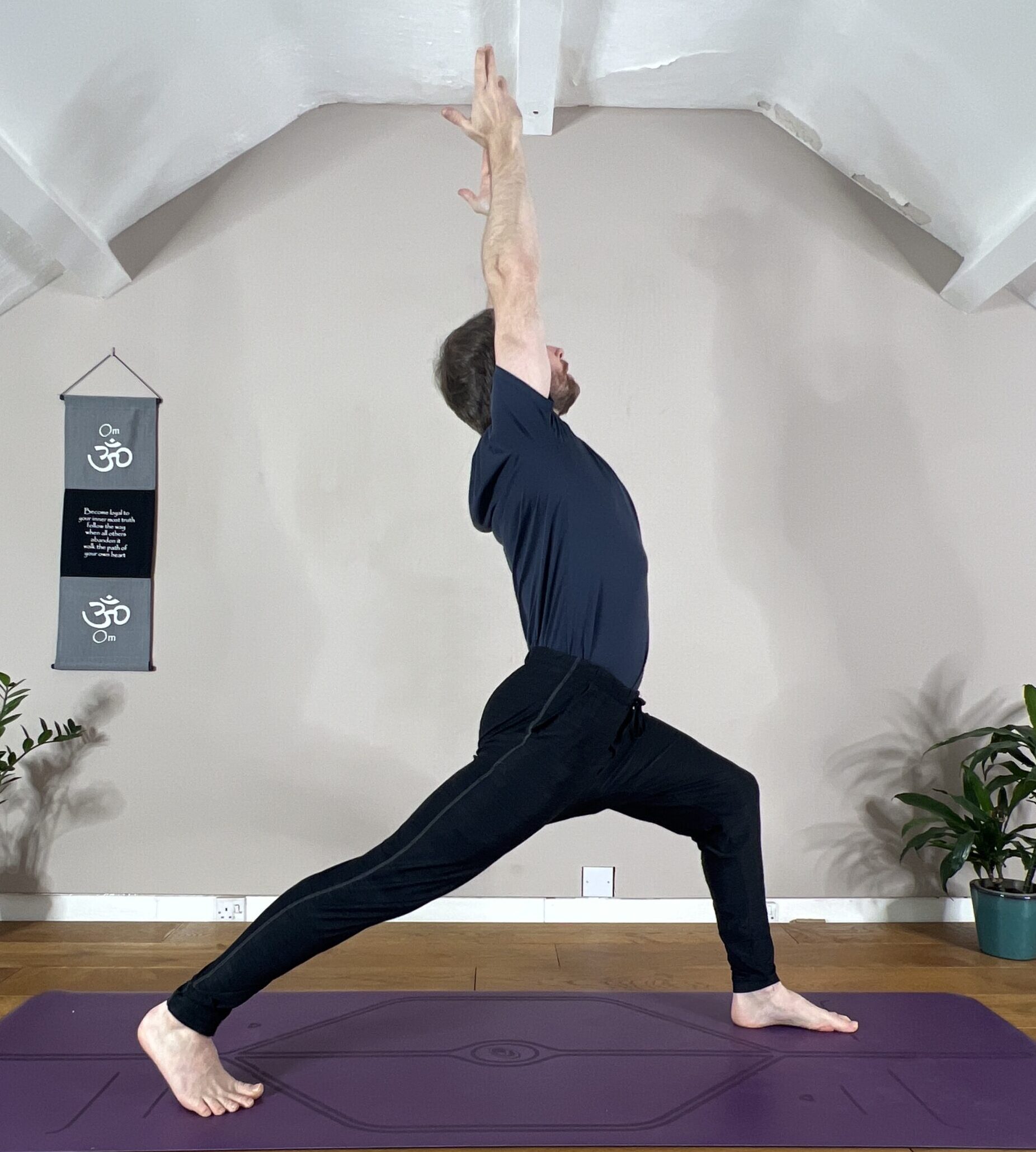
1. Establish the Base
Start in Downward-Facing Dog (Adho Mukha Svanasana). Step your right foot forward between your hands, aligning the knee over the ankle.
- Press through the mound of the big-toe and outer heel in the front foot.
- Keep the back leg extended, heel lifted, glute engaged – creating an elastic tension from heel to crown.
2. Organize the Pelvis
Draw your right hip back, left hip forward. This isometric contraction stabilises the pelvis.
- If by engaging the glute creates lumbar spine compression, bend the rear knee.
- Isometrically drag the front foot back to activate the hamstring to create extra stability at the pelvis.
3. Lift Through the Spine
Inhale to bring your torso upright, arms reaching overhead.
- Think axial extension: the spine lengthens upward from the sacrum to the skull.
- Keep ribs contained by gently engaging the abdominals to prevent hyperlordosis (overarching) at the lower back.
4. Integrate the Shoulders
Externally rotate the arms and engage the upper traps.
- Feel the shoulder blades upwardly rotate as the fingertips reach up.
- Serratus anterior activation helps stabilize the scapulae for safe overhead lift.
5. Find the Breath-Body Link
Direct breath into your front-ribs.
- Inhale to create intra-abdominal pressure and length through the front-body.
- Exhale to root through the feet and stabilize the pelvis.
6. Hold and Refine
Stay for 5 – 8 breaths.
- Notice the subtle way your hip stabilisers are firing to keep you upright.
- Keep micro-adjusting the front foot pressure to stay dynamically balanced.
7. Release with Control
On an exhale, bring your hands to the mat and step back into Downward-Facing Dog.
Repeat on the opposite side.
Modifications and Props (From a Functional Lens)
- Limited Hip Mobility? Shorten the stance between the front and rear foot to help reduce hip flexion and hip extension.
- Poor Balance? Widen your stance (front-to-back and side-to-side) to increase the base of support.
- Hip Stability Work: Create a fist in the same side arm as the front foot. Place this fist on the outside edge of the front thigh and press into the fist, whilst simultaneously pressing back into the thigh. This can help create hip stability through the hip and leg in the front foot.
Variations for Progressive Loading
1. Twisted High Lunge (Parivritta Alanasana)
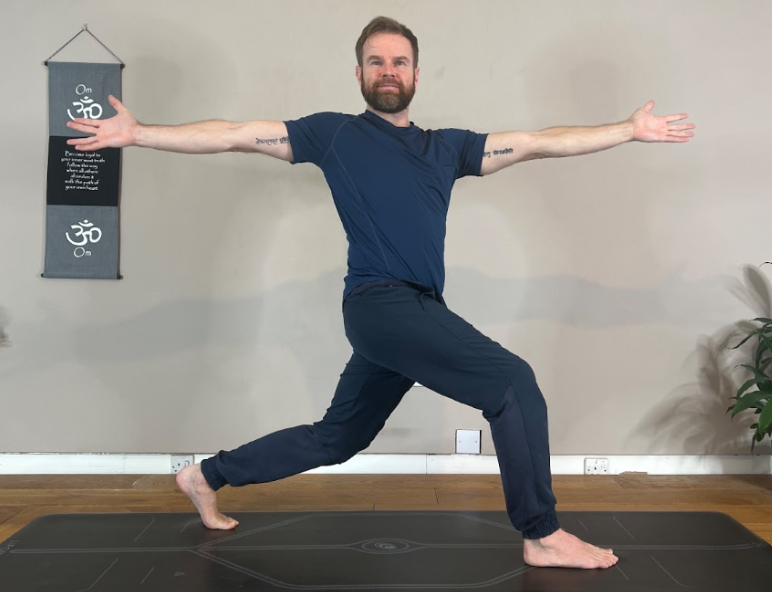
- Stimulates thoracic rotation and fascial stretch across the oblique sling system (external oblique to opposite adductor).
- Improves rotational mobility and spinal control.
2. High Lunge with Pulses
- Micro-bend and straighten the back knee with breath.
- Encourages dynamic eccentric control and motor pattern refinement.
3. Warrior III Transition (Virabhadrasana III)
- Shifts load into single-leg balance.
- Strengthens hip stabilizers (glute medius, adductors) and deepens neuromuscular coordination.
Kinesiological Keys for Practicing High Lunge
| Principle | Application in Pose | Why It Matters |
| Ground Reaction Force | Press firmly into front foot | Builds kinetic awareness and power through the chain |
| Eccentric Control | Front hamstring stabilizes pelvis | Prevents strain and enhances mobility |
| Core Bracing | Transverse abdominis engaged | Protects the lumbar spine and supports diaphragm efficiency |
| Spinal Elongation | Axial lift through the crown | Promotes decompression and postural alignment |
| Fascial Continuity | Feel the stretch line from the back heel to the anterior rear hip and up through the anterior body | Integrates the superficial front line and enhances energy flow |
When to Include High Lunge in Practice
- Pre-Flow Activation: Warms up hip flexors and quads before deeper backbends or standing sequences.
- Mid-Flow Strength Work: Builds endurance and integrates balance under fatigue.
- Posture Correction: Re-educates spinal alignment and pelvic neutrality.
- Mind-Body Integration: Excellent for linking breath, awareness, and movement control.
Contraindications and Cautions
- Knee Vulnerability: Keep the front shin vertical and activate glutes for protection.
- SI Joint Sensitivity: Avoid forcing pelvic square – allow natural rotation if needed.
- Lower Back Issues: Maintain neutral spine; avoid compressing the lumbar curve. Bend the knee of the rear leg to create space in the lower back.
- Pregnancy: Lower the back knee and focus on gentle hip opening.
Final Thoughts
From a movement science perspective, High Lunge is a functional integration drill – it refines how force travels through your kinetic chain. It reminds us that yoga isn’t about isolating muscles but orchestrating them.
When performed with breath awareness and structural integrity, High Lunge transforms from a simple stretch into a neuromuscular symphony – balancing tension and release, grounding and lift.
Ready to build stronger movement awareness?
Join my online classes on Patreon or explore 1:1 mentorship in the DJY Mentorship Program – where biomechanics meets embodied yoga.