Skip to content

8 Best Yoga Poses for Sleep That Calm the Nervous System Naturally
Sleep is not a passive event.
It is a physiological state governed by the nervous system.
Most modern sleep struggles are not caused by a lack of physical fatigue, but by a nervous system that never fully downshifts. Long periods of cognitive load, screen exposure, emotional stress, and irregular routines keep the body locked in sympathetic dominance – alert, vigilant, and unable to release.
From a movement science perspective, yoga supports sleep not by stretching muscles, but by modulating neural tone. Specific postures influence breathing mechanics, baroreceptor feedback, proprioceptive input, and vagal signaling – all of which determine whether the body can safely enter rest.
The following eight poses are selected not for flexibility or effort, but for their direct impact on nervous system regulation.
What Does “Calming the Nervous System” Actually Mean?
Physiologically, quality sleep requires a shift from:
- Sympathetic activation (fight / flight)
to - Parasympathetic dominance (rest / digest)
This shift involves:
- Slower heart rate
- Increased vagal tone
- Reduced cortical arousal
- Improved diaphragmatic breathing
- Decreased muscular guarding
The poses below work by influencing these systems through position, pressure, breath, and sensory feedback.
1. Legs Up the Wall Pose (Viparita Karani)
Legs Up the Wall is one of the most efficient postures for nervous system down-regulation.
By placing the legs above the heart, the body receives immediate feedback from baroreceptors (pressure sensors) that circulation is supported and effort is unnecessary. This encourages a reflexive drop in heart rate and sympathetic drive.
Kinesiological & Neurological Effects
- Reduces gravitational load on the lower limbs
- Enhances venous return
- Decreases muscular tone in hips and legs
- Encourages slow, passive breathing
- Improves vagal tone via pressure regulation
Why It Supports Sleep
This posture shifts the body out of action mode and into physiological safety, a prerequisite for sleep onset.
2. Child’s Pose (Balasana)
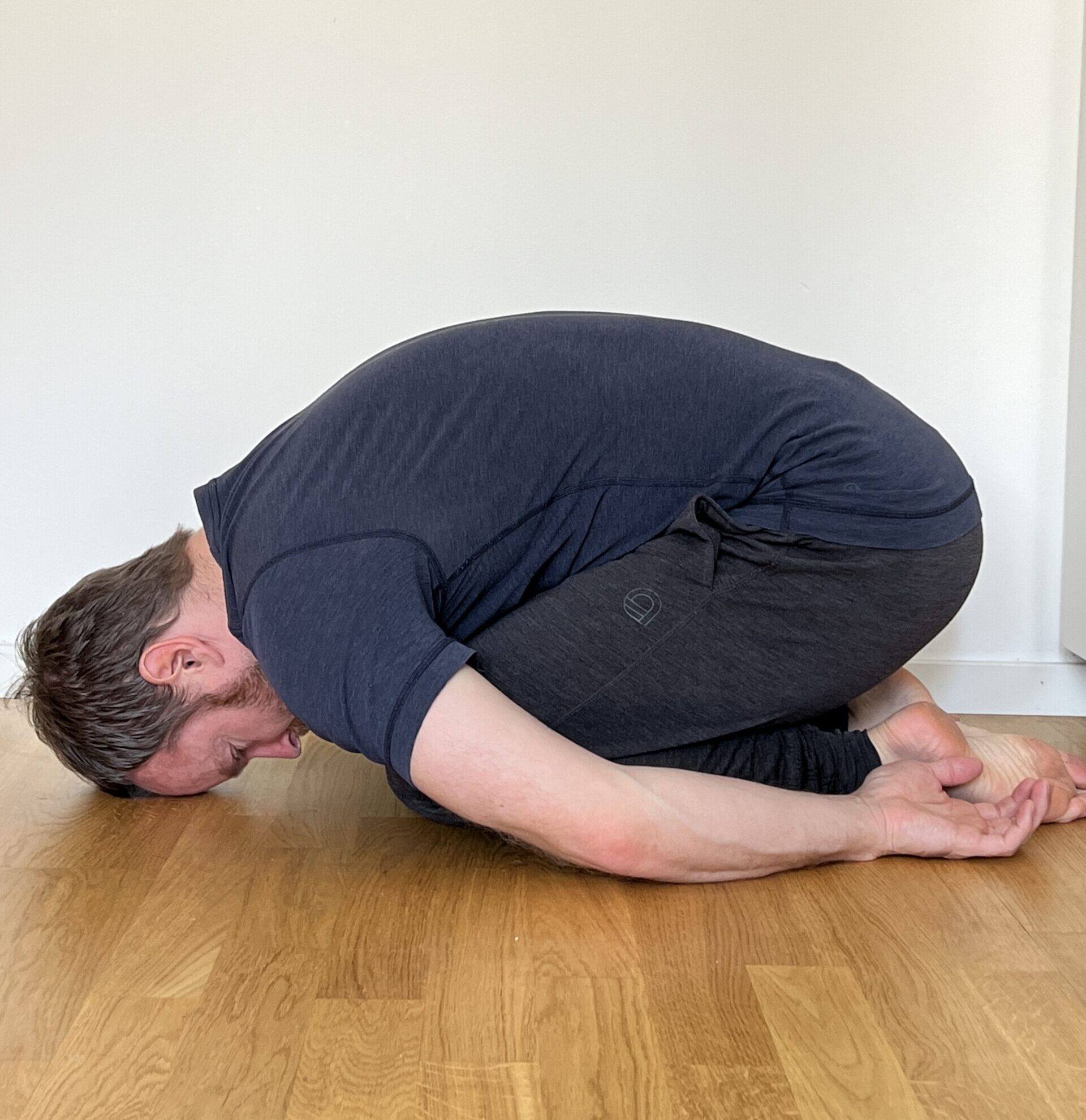
Child’s Pose places the body in a flexed, contained position that the nervous system associates with protection.
The compression of the torso combined with spinal flexion stimulates parasympathetic pathways while limiting sensory input.
Kinesiological Breakdown
- Gentle spinal flexion reduces extensor muscle tone
- Abdominal compression supports diaphragmatic breathing
- Forehead contact increases proprioceptive calming input
Why It Supports Sleep
Balasana reduces cortical stimulation and helps quiet emotional and mental agitation, making it ideal before bed.
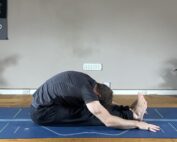
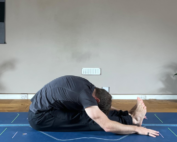
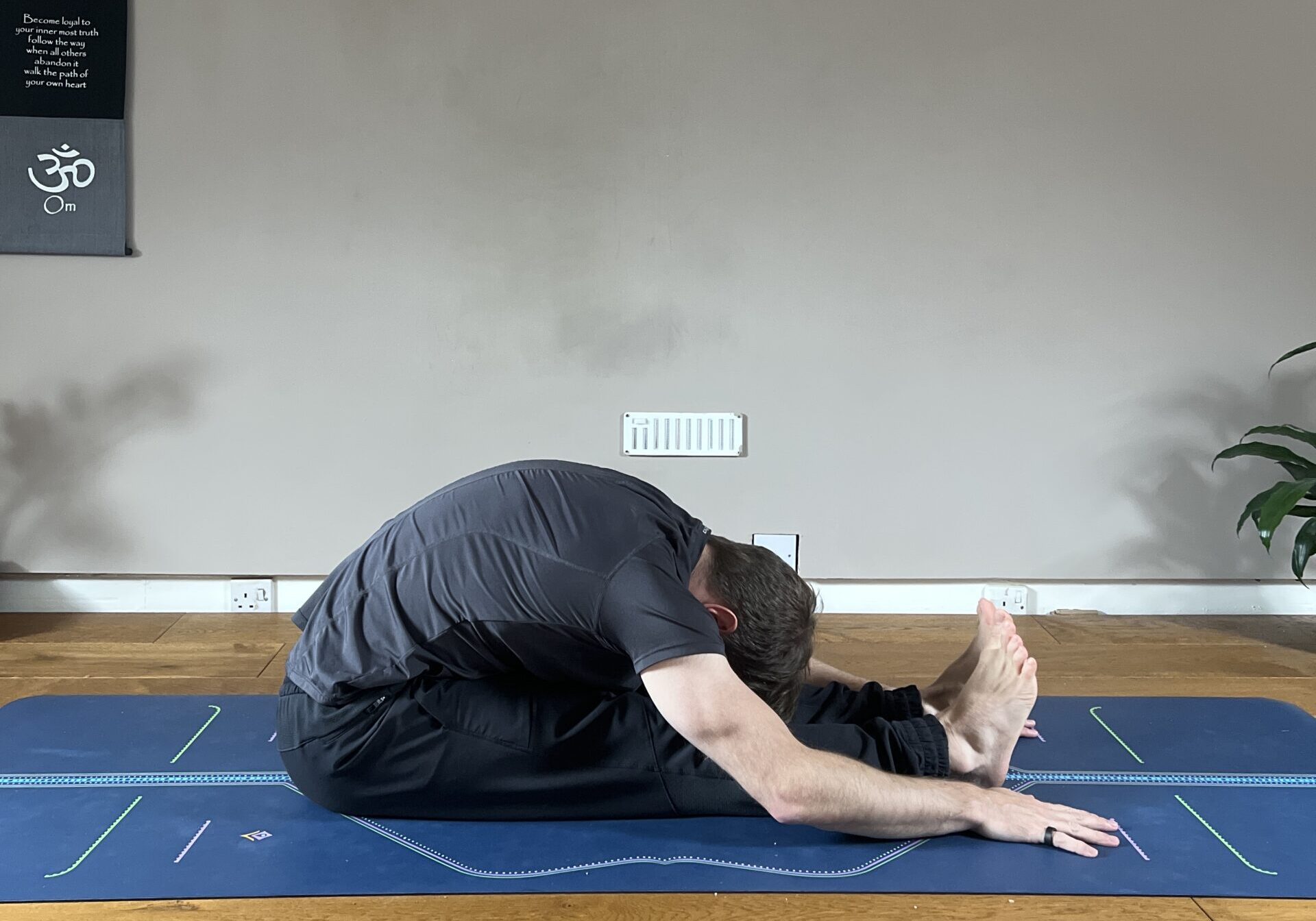
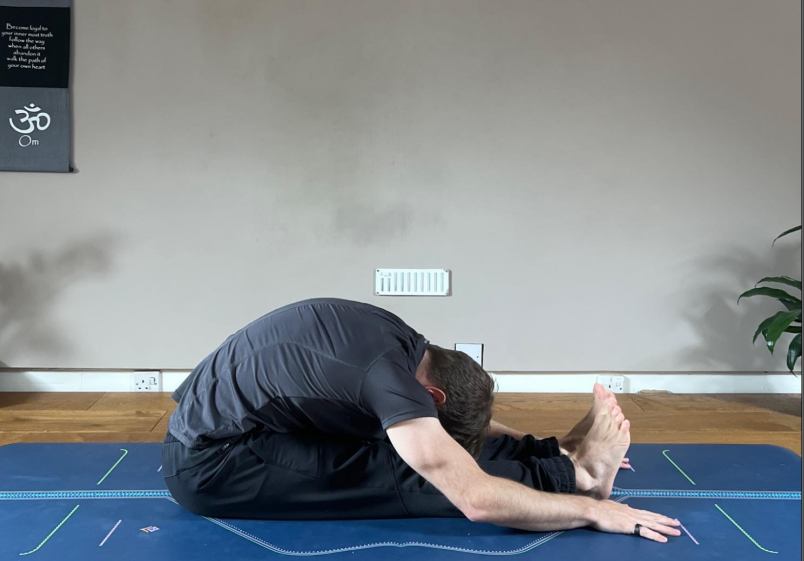
3. Seated Forward Fold (Paschimottanasana)
Forward folds encourage interoception – attention turning inward.
This pose lengthens the posterior chain while simultaneously reducing visual and vestibular stimulation, two key drivers of alertness.
Nervous System Effects
- Reduces sympathetic arousal
- Increases parasympathetic dominance
- Softens spinal musculature
- Encourages slower respiratory rhythm
Why It Supports Sleep
The body shifts from external engagement to internal quiet, preparing the brain for rest.
4. Supine Twist (Supta Matsyendrasana)
Supine twists gently mobilize the spine while keeping the body fully supported by the ground.
Twisting also influences the autonomic nervous system through visceral stimulation and improved diaphragmatic movement.
Kinesiological Breakdown
- Releases thoracolumbar tension
- Improves rib mobility for breathing
- Supports digestion via abdominal massage
- Reduces spinal compression
Why It Supports Sleep
When spinal tension decreases, neural input to the brain quiets, allowing sleep cycles to initiate more easily.
5. Reclined Butterfly Pose (Supta Baddha Konasana)
The hips are closely linked to emotional holding patterns.
Reclined Butterfly places the pelvis in a position of openness while maintaining full support, encouraging release without effort.
Neuromuscular Effects
- Reduces tone in hip flexors and adductors
- Encourages diaphragmatic breathing
- Down-regulates pelvic floor guarding
- Signals safety to the nervous system
Why It Supports Sleep
When the pelvis relaxes, overall neural tone decreases, creating conditions for deep rest.
6. Cat–Cow (Marjaryasana–Bitilasana)

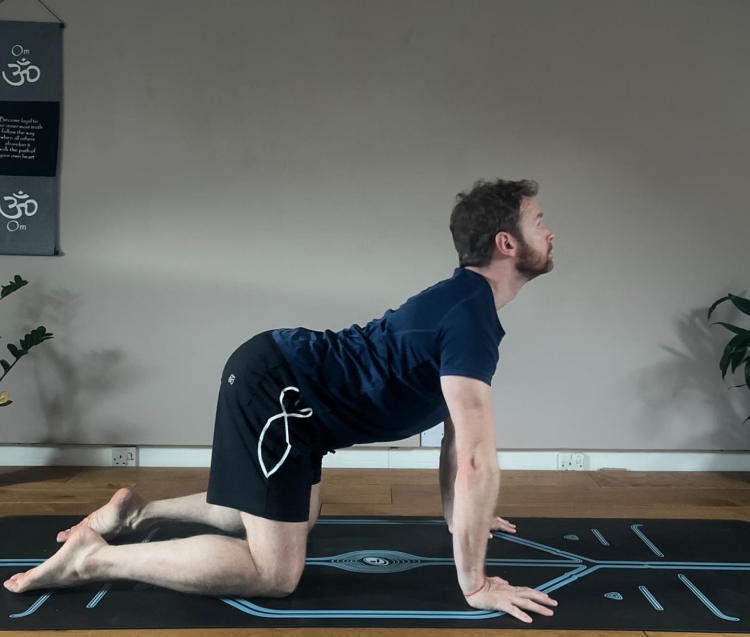
Cat–Cow synchronizes breath and spinal movement, directly influencing neural rhythm.
This coordination reduces mental chatter by anchoring attention in sensation and motion.
Kinesiological Breakdown
- Improves spinal fluid movement
- Regulates breathing patterns
- Reduces muscular stiffness
- Calms the limbic system
Why It Supports Sleep
Rhythmic movement paired with breath helps the nervous system transition out of overthinking mode.
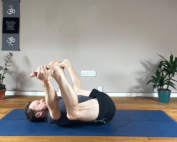
7.Happy Baby Pose (Ananda Balasana)
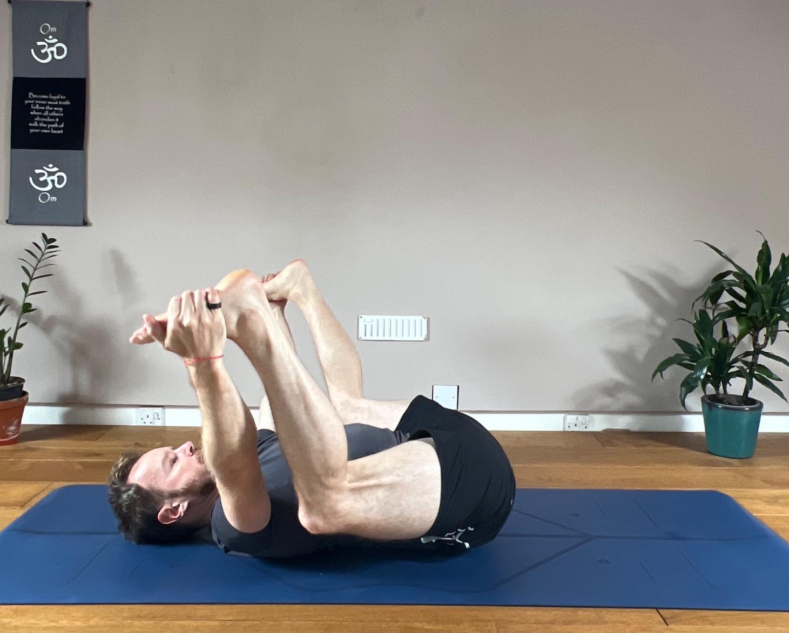
Happy Baby releases tension in the sacrum, hips, and jaw – areas commonly associated with unconscious stress storage.
Gentle rocking provides vestibular input that further calms the nervous system.
Neurological Effects
- Decompresses the lower spine
- Reduces sacral tension
- Encourages parasympathetic activation
- Softens facial and jaw muscles
Why It Supports Sleep
This pose reduces deep-seated tension patterns that interfere with physical relaxation.
8. Corpse Pose (Savasana)

Savasana is not simply lying down.
It is neurological training for rest.
The body learns how to fully disengage muscular effort while maintaining awareness.
Nervous System Effects
- Decreases brainwave frequency
- Releases residual muscular tone
- Reduces sensory input
- Supports deep parasympathetic dominance
Why It Supports Sleep
Regular Savasana practice shortens the time it takes for the nervous system to enter sleep states.
Key Principles for Using Yoga to Improve Sleep
- Less effort, more awareness
- Breath precedes movement
- Support the body, don’t challenge it
- Consistency matters more than duration
- Sleep is learned behavior for the nervous system.
When to Practice These Poses
- Evening wind-down routines
- After mentally demanding days
- During periods of poor sleep quality
- As part of nervous system recovery cycles
Even 10 minutes is enough to create change.
Contraindications and Cautions
- Avoid intense stretching late at night
- Skip poses that trigger alertness or effort
- Modify any position that creates discomfort
- Prioritize breath over shape
Final Thoughts
From a nervous system perspective, sleep is not something you do – it is something that happens when the body feels safe, supported, and regulated.
These poses are not about flexibility or performance. They are about teaching the nervous system how to let go.
Each posture communicates a message:
- The ground is stable
- The breath is slow
- The body is supported
- Vigilance is no longer required
Over time, this consistent signaling reshapes neural patterns, making rest more accessible and sleep more sustainable.
Yoga, in this context, becomes more than a practice.
It becomes neurological education – training the body to rest with intelligence and ease.
Ready to build a calmer nervous system and more restorative sleep?
Join me in my online yoga classes on Patreon or explore deeper nervous-system-informed practice through the DJY Mentorship Program, where we move beyond shapes and into physiology, breath, and intelligent regulation.